
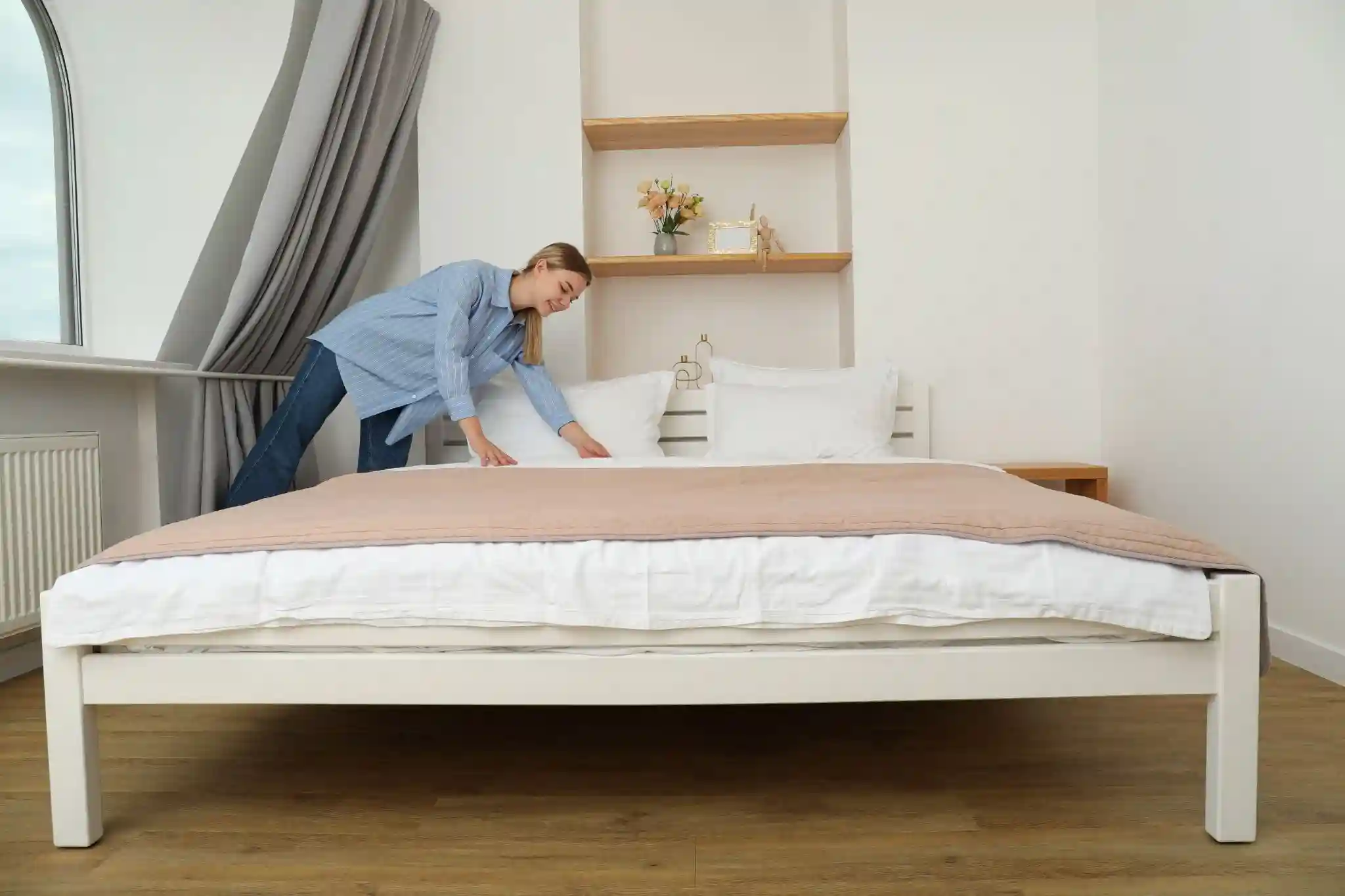
Most people spend a lot of time choosing the right mattress. They test firmness levels, compare materials, and read reviews for hours. Then they place that carefully chosen mattress on whatever bed frame is available and assume the job is done. That assumption is costing them sleep. A bed frame is not just a platform to keep your mattress off the floor. It is a structural system that directly affects how your mattress performs, how your body is supported, and how well you actually rest each night. The relationship between bed frames and sleep quality is real, measurable, and widely underestimated.
How Bed Frame Structure Influences Mattress Performance
What Happens When a Mattress Lacks Proper Support
Every mattress is engineered with a specific support system in mind. Memory foam needs a solid or closely slatted base to maintain its pressure-relieving properties. Innerspring mattresses need enough give underneath to allow coil movement. When the base does not match these requirements, the mattress cannot do what it was designed to do. A memory foam mattress placed on widely spaced slats begins to sag between the gaps over time. That sagging creates uneven pressure points, which disrupts your spinal alignment while you sleep. Poor spinal alignment is one of the most common causes of waking up with back pain, stiffness, and general fatigue that no amount of sleep seems to fix.
Slat Spacing, Centre Legs, and the Science of Weight Distribution
Slat spacing is one of the most technically important factors in a bed frame that buyers rarely check. Most mattress manufacturers recommend slat gaps of no more than 2 to 3 inches to ensure consistent support across the entire sleeping surface. Wider gaps force the mattress to bridge unsupported sections, which accelerates wear and reduces comfort. Center support legs are equally critical, especially for queen and king-size frames. Without them, the middle of the frame flexes under body weight, creating a hammock-like dip that pulls the spine out of alignment. This is subtle enough that many sleepers do not immediately connect it to their poor sleep, but the cumulative effect over weeks and months is significant.
How the Wrong Base Can Void Your Mattress Warranty
There is a practical consequence to using the wrong frame that goes beyond comfort. Most mattress warranties include specific foundation requirements. If your mattress develops a sag or indentation and you file a claim, the manufacturer will often ask for proof that the mattress was used on an appropriate base. A frame that does not meet their specifications can result in a denied warranty claim. This means the financial investment you made in a quality mattress is left completely unprotected simply because of the frame it sat on.
Bed Frame Materials and What They Mean for Your Sleep
The material a bed frame is made from affects more than just how it looks. Wood frames, particularly solid hardwood, offer excellent stability and very little flex. They absorb vibration well, which helps reduce disturbance when a partner moves during the night. Metal frames are durable and often more affordable, but they can be prone to squeaking as joints loosen over time. That noise might seem minor, but research consistently shows that unexpected sounds during light sleep stages are enough to pull a sleeper partially out of deep rest without them fully waking. Upholstered frames add a layer of padding around the perimeter, which some sleepers find reduces noise and adds a sense of enclosure that promotes feelings of safety and calm. The material choice is not just aesthetic. It has a direct line to the quality of your night.
Platform, Slatted, Adjustable, and Box Spring Frames Compared
Platform Frames and Their Effect on Mattress Feel
Platform frames provide a solid, flat sleeping surface that works particularly well with foam and latex mattresses. Because the support is even and continuous, the mattress sits uniformly and delivers consistent pressure relief across the body. Sleepers who prefer a firmer overall feel often gravitate toward platform frames because the rigid base reduces the amount of sink. However, this same quality can be a drawback for those who want a softer, more responsive feel. The frame underneath essentially becomes part of the sleep equation, and a solid platform will always make any mattress feel slightly firmer than it would on a more flexible base.
Adjustable Bases and Their Role in Targeted Sleep Relief
Adjustable bases represent the most significant functional leap in bed frame technology. They allow the head and foot of the bed to be raised independently, which opens up a range of sleep positions that a flat surface simply cannot accommodate. Elevating the head reduces snoring and can significantly relieve symptoms of acid reflux and sleep apnea. Raising the feet takes pressure off the lower back and improves circulation, which is particularly beneficial for people who spend long hours on their feet or suffer from chronic lower limb swelling. The investment is considerably higher than a standard frame, but for sleepers managing specific physical conditions, the impact on nightly rest can be transformative.
Why Box Spring Compatibility Still Matters for Certain Sleepers
Box springs are often dismissed as outdated, but they still serve an important purpose for specific mattress types. Traditional innerspring mattresses were designed to work with a box spring, and using one provides the bounce and responsiveness those mattresses were built to deliver. Box springs also add height, which matters for people who have difficulty getting in and out of bed. If you are using a modern hybrid or foam mattress, a box spring is generally not recommended and can actually reduce support. The key is matching the foundation to the mattress type rather than defaulting to what you have always used.
Motion Transfer, Noise, and Night Disruptions
Shared sleep is one of the most common sources of sleep disruption, and the bed frame plays a bigger role in this than most couples realise. Frames with poor joint construction allow movement to travel across the entire surface, meaning every time one partner shifts position, the other feels it. Metal frames with bolt connections are particularly susceptible to this over time as the hardware loosens. Wooden slatted frames with individual slat movement can also transfer motion unevenly. If motion transfer is a persistent issue in your household, looking at the frame construction before investing in a new mattress is a more targeted and cost-effective starting point. Tightening joints, adding rubber padding between slats, or switching to a platform frame with a solid base can resolve the problem without a major financial outlay.
Bed Frame Height and Its Effect on Sleep Comfort
Frame height affects sleep in two distinct ways. The first is physical accessibility. A frame that sits too low makes getting in and out of bed difficult, particularly for older adults, people recovering from injury, or anyone with hip and knee issues. Repeated strain from getting up from a very low position can create enough physical discomfort to disrupt sleep patterns and reduce the motivation to go to bed at a sensible hour. The second is psychological. Sleep research suggests that bed height can subtly influence how the brain associates a sleeping space with rest. A bed that feels proportionate to the room and comfortable to enter tends to reinforce positive sleep associations, while an uncomfortable or awkward bed height can create a low-level aversion to the sleep environment itself.
Ventilation, Temperature, and the Frame Beneath You
Body temperature regulation is one of the most critical factors in sleep quality, and most people do not connect it to their bed frame at all. Frames that sit close to the floor or use a solid platform without ventilation channels can trap heat between the mattress and the base. Foam mattresses are especially vulnerable to this because they already retain more heat than spring alternatives. A slatted frame allows airflow underneath the mattress, which helps dissipate heat and keeps the sleep surface cooler throughout the night. If you regularly wake up feeling overheated or find yourself pushing covers off in the middle of the night, the problem may not be your mattress or your bedding. It may be the frame trapping heat underneath you.
Conclusion
Your bed frame is the foundation on which everything else rests, literally and functionally. Most sleep problems are blamed on stress, screens, or the wrong mattress, but the frame underneath is rarely examined. It influences how your mattress performs, how your body temperature regulates, how much your partner’s movement affects you, and how easily you transition in and out of rest. Treating the bed frame as an afterthought is one of the most common and costly mistakes in building a healthy sleep environment. Get the foundation right, and everything placed on top of it has a far better chance of actually working.